
Problem post
Meal planning when your partner won't help

Short answer
If your partner won't meal plan with you, don't wait for them to want to. Plan the week yourself, but replace open-ended questions like "what do you want?" with a choice between two options, and keep the plan and grocery list somewhere they can see without asking. Shared visibility gets more real participation than an invitation to plan from scratch.
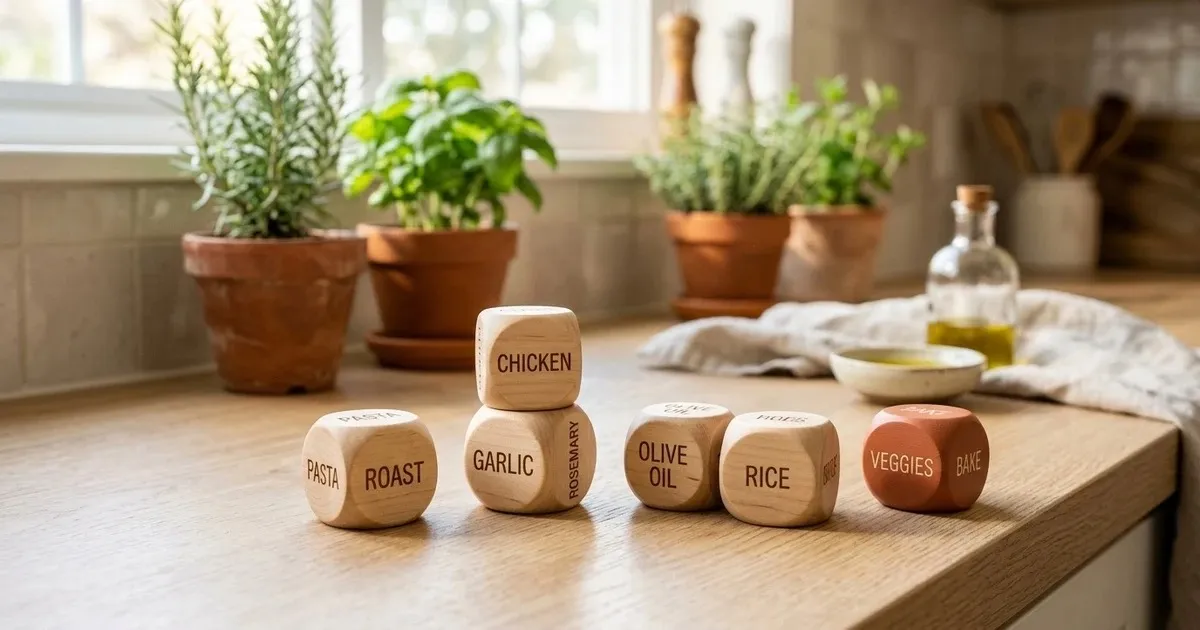
“Are there any tricks for choosing meals for the week, when your partner hates meal planning?” is a question real enough that it’s a recurring post on Reddit’s r/mealprep, not a rare complaint. The honest answer is that you can’t make someone enjoy planning. You can change what you’re asking them to do.
Why won’t my partner help with meal planning?
Usually not because they don’t care about dinner. Planning from a blank page is its own skill: knowing what’s in the fridge, what you both ate recently, what fits the week’s schedule, and what to buy for it. Someone who finds that overwhelming isn’t necessarily uninterested in eating well; they may just be bad at, or uninterested in, the specific task of building a week from nothing.
That distinction matters, because it points at a different fix than “get them to care more.” The fix is to shrink the task, not raise their motivation.
What actually gets a reluctant partner to participate?
Replace open questions with closed ones, and make the plan visible instead of asking about it.
- Ask “A or B,” not “what do you want.” “Tacos or the chicken skillet tonight?” takes seconds to answer. “What do you want for dinner this week?” is the same blank page you’re already stuck on, handed to someone with less context than you.
- Share the plan and the list, don’t report them. A plan that lives only in your head means every question about dinner comes to you. A shared list means your partner can look themselves instead of asking you, and can add to it themselves if they think of something.
- Give them one task, not the whole job. Planning, shopping and cooking are three different jobs. Someone who won’t plan a week might happily own Thursday’s dinner, or the grocery run, or chopping vegetables while you cook.
- Let a rotation do some of the deciding for both of you. If you’ve set up theme nights, asking “chicken or beef for Taco Night” is a much smaller ask than “help me plan five dinners.”
What does this look like as an actual habit?
- You plan first, using a rotation or a short list of go-to dinners so it takes you minutes, not an hour.
- You ask one closed question per night you’re not sure about, not one open question for the whole week.
- The plan and grocery list live somewhere shared, not in a notebook only you open. A meal planning app with a shared grocery list does this without anyone copying the list out.
- One task becomes theirs, chosen by them, even a small one.
None of this requires your partner to become the planner. It only requires the plan to stop living entirely in your head.
How can a shared meal planning app help with this specifically?
A shared plan and a shared list are the two things worth having in an app for this exact problem, more than any recipe feature. In WeeknightBite, once you create a household, both partners see the same meal plan and the same grocery list, and either person can open, check off, or add to them. If your partner ticks something off from the store, you see it update on your phone in real time; you don’t have to ask.
Two real dinners to try the “A or B” trick with tonight:
- Mild Beef Taco Bowls with Rice & Sweet Corn, 25 minutes.
- Cheesy Broccoli Chicken Skillet with Jasmine Rice & Cheddar, 24 minutes.
Every recipe in the library is cooked and tested by a person before it goes in the app, so either answer is a real dinner, not a placeholder. For more pairs to offer, browse the recipes by protein and pick two from the same section.
What if they still won’t engage at all?
Then keep the ask small and specific rather than growing it. “Pick between these two” is a five-second decision; “help me plan this week” is not, and repeating the bigger ask after it hasn’t worked usually gets the same answer. A shared, visible plan means the lack of help is at least no longer invisible labor. It’s a real difference, even if it isn’t the full partnership you’d want.
Frequently asked questions
Is it normal for one partner to do all the meal planning?
It’s common, but common isn’t the same as sustainable. The goal here isn’t to force a 50/50 split immediately, it’s to make the current split visible and to lower the cost of what little participation you can get.
What if my partner has different food preferences?
Closed questions still work: “the version with X or the version without it” is still easier to answer than an open one, and a shared list means you can each flag what you don’t want without a conversation.
Does a meal planning app fix a relationship problem?
No, and we’re not claiming it does. What it removes is one specific friction: a plan and list that live in only one person’s head. That’s a small, real thing, not a fix for how two people split effort more broadly.
Can you share a grocery list with your partner?
Yes, as long as the list lives in an app you both use. Check that it syncs between your two phones, including an iPhone and an Android phone, and that your partner doesn’t need a separate subscription. In WeeknightBite, a household shares one plan and one grocery list for free, and when one of you ticks something off, the other sees it right away.
Is WeeknightBite available yet?
Yes. WeeknightBite is free to download on iPhone, iPad and Android; the button at the end of this post takes you to the App Store or Google Play. Coming from Mealime? Paste your recipe links on our Mealime page, and they will be waiting in your account.