
How-to
Cook once, eat three times: the batch-protein trick, and what to cook the other nights

Short answer
Cook once, eat three times means cooking one large batch of a protein, such as a whole chicken or several pounds of ground beef, then turning it into three differently flavored dinners across the week instead of cooking from scratch each night. It cuts weeknight cooking time to reheating and assembly, at the cost of eating a version of the same protein three times.
Cooking dinner from scratch five nights a week is one set of decisions and prep, every single night. The batch-protein trick, well known in meal-prep circles and a recurring answer whenever someone on Reddit asks how to make weeknight cooking easier, swaps that for one longer session and three shorter ones.
What is the “cook once, eat three times” method?
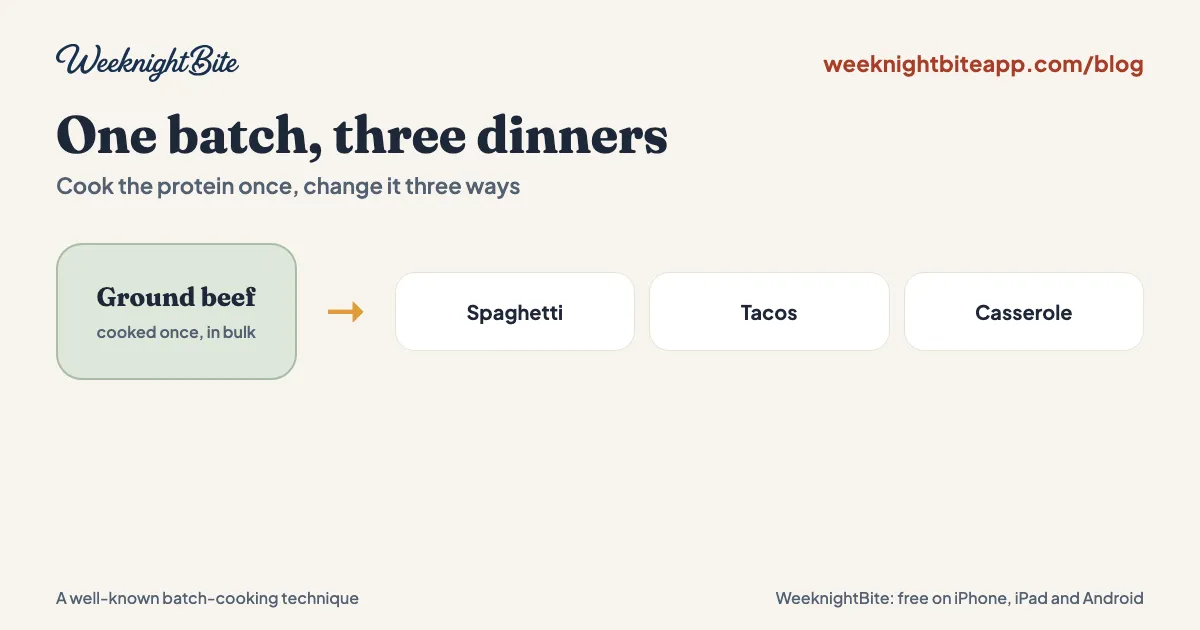
You cook a large amount of one protein once, usually on a slower day, then turn it into three different meals through the week instead of three separate from-scratch dinners. A whole roast chicken becomes chicken with mashed potatoes one night, chicken tacos the next, and chicken and rice soup made from the bones on a third. Several pounds of browned ground beef become spaghetti one night, tacos another, and a casserole a third. The protein is the same; the flavor, format and effort each night are not.
Why does this actually save time?
Because the expensive part of cooking, on a weeknight, usually isn’t the last ten minutes; it’s getting a protein from raw to cooked. Do that once, and every other night starts from “already cooked,” not “already in the fridge as raw meat.” A commenter in the r/mealprep thread that prompted this post described exactly this: cook a beef roast or a batch of slow-cooker chicken on the big-cook day, then turn what’s left into two or three totally different dinners with less than 30 minutes of hands-on time each.
The trade-off is real too: it’s the same protein three times, just dressed differently, and it needs a day with enough time to do one longer cook. If neither of those works for your week, this isn’t the right trick for you, and that’s fine.
How do I actually set this up for a week?
- Pick one protein and one cooking day. A whole chicken, a beef roast, or several pounds of ground beef all work; pick whichever fits how you shop.
- Cook it once, in bulk. Roast the chicken, braise the roast, or brown all the ground beef at once, rather than in separate smaller batches later.
- Split it across three flavor directions. Keep some plain for a straightforward dinner, season a second portion differently, and use a third portion in something that barely resembles the first, like a soup or a filling.
- Refrigerate what you’re eating this week, freeze the rest. Most food-safety guidance puts cooked meat at three to four days safely refrigerated; anything beyond that is better frozen.
- Fill the remaining nights with something fresh, so the week isn’t the same protein every single night. One-pot dinners keep those nights to a single pan to wash.
What do I cook on the nights that aren’t leftovers?
That’s the other half of a realistic week: nights where you’d rather cook something new than reheat. Here are real dinners from WeeknightBite’s library for two of the most common batch proteins, each cooked and tested by a person before it goes in the app:
If your batch protein was chicken:
| Dinner | Time |
|---|---|
| Spiced Chicken Shawarma with Turmeric Couscous & Garlic Sauce | 26 min |
| Hot Honey Garlic Chicken with Apple Slaw & Sesame | 24 min |
| Creamy Tomato Chicken Pasta with Baby Spinach & Parmesan | 25 min |
If your batch protein was ground beef:
| Dinner | Time |
|---|---|
| Cheesy Beef Pasta Skillet with Sweet Peas & Cheddar | 25 min |
| Mild Beef Taco Bowls with Rice & Sweet Corn | 25 min |
For other proteins, the recipe index groups every dinner by protein, so you can pick the fresh nights from a different section than your batch.
Keep the fresh dinners your household liked on a go-to meals list for next time. Plan the batch-cook day and the fresh nights together, and WeeknightBite builds one grocery list across all of it, so a fresh recipe’s ingredients and your batch-cook shopping don’t turn into two separate trips.
Do I need special equipment to batch-cook a protein?
No. A regular oven or a stovetop pot handles a whole chicken, a roast, or several pounds of ground beef; nothing here needs a slow cooker or pressure cooker, though either works too if you already have one.
Frequently asked questions
How long does batch-cooked protein keep in the fridge?
Most food-safety guidance puts cooked meat at three to four days safely refrigerated. Cook on the day you plan for it, eat within that window, and freeze anything you won’t get to in time.
Won’t I get tired of eating the same protein three times?
That’s the real trade-off of this method. Changing the seasoning, format and side dish each time helps, and filling one or two nights with something fresh instead of a third leftover version is the easiest fix.
What’s a good first protein to try this with?
A whole roast chicken is the easiest starting point: it comes apart cleanly into shredded meat for two different meals, and the carcass makes a broth for a third.
What’s the difference between batch cooking and meal prep?
Batch cooking means cooking a large amount of one thing, like a whole chicken or a pot of ground beef, then turning it into different dinners across the week. Meal prep usually means making whole meals ahead and portioning them into containers to eat as they are. This post is the batch-cooking kind: you change the seasoning and the side each night, so the three dinners don’t taste like the same leftover.
Is WeeknightBite available yet?
Yes. WeeknightBite is free to download on iPhone, iPad and Android; the button at the end of this post takes you to the App Store or Google Play. Coming from Mealime? Paste your recipe links on our Mealime page, and they will be waiting in your account.